
NEWS
Growing Calls for Accountability as Critics Question Trump’s Fitness for Office

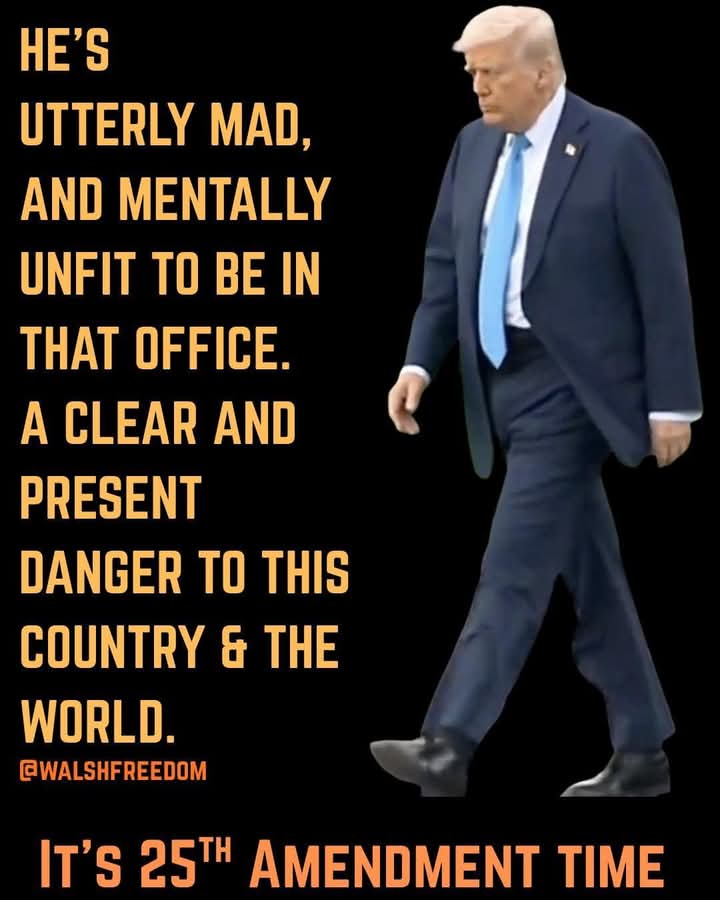
WASHINGTON, D.C. — A renewed wave of political criticism is intensifying around former President Donald Trump, with critics arguing that he no longer possesses the physical stamina or mental sharpness required to carry out the responsibilities of the presidency.
These concerns, voiced primarily by Democratic lawmakers and some political commentators, are now being coupled with urgent calls for Republicans in Congress to act sooner rather than later.
Those raising the alarm contend that the presidency demands constant attention, emotional discipline, and the ability to navigate complex domestic and international crises.
They argue that Trump’s recent public appearances, statements, and conduct have fueled doubts about his readiness to meet those demands consistently.
“This is not about party loyalty,” critics say.
“It’s about national security, institutional stability, and the long-term health of American democracy.”
A Question of Responsibility, Not Politics.
Advocates for immediate action argue that Congress has a constitutional obligation to intervene when serious concerns arise about a president’s capacity to govern effectively.
They point to existing mechanisms — including impeachment proceedings or the 25th Amendment — as tools designed precisely for moments when leadership fitness is in question.
While Republicans have largely dismissed these claims as partisan attacks, critics warn that delay carries its own risks.
They argue that waiting until a future election cycle or a potential shift in congressional control could leave the nation exposed to unnecessary instability.
“If lawmakers believe there is a legitimate issue,” one analyst noted, “inaction becomes a decision in itself — and one with consequences.”
Concerns About Time and Damage**
Central to the argument is urgency.
Critics caution that every month of delay could deepen political divisions, strain alliances, or lead to policy decisions that are difficult to reverse. They emphasize that the presidency is not a ceremonial role, but one with sweeping authority over the military, the economy, and foreign relations.
Some also argue that the longer Congress waits, the more politically charged and chaotic any eventual intervention could become — especially if action is postponed until after a contentious election.
Republican Resistance and Internal Tension**
Republican leaders have thus far rejected calls to remove Trump from office, framing the criticism as exaggerated and politically motivated. However, critics say silence or reflexive defense does little to reassure a public already concerned about leadership standards and accountability.
Behind closed doors, observers suggest the debate is more complicated, with some Republicans privately weighing institutional loyalty against party unity.
A Defining Test for Congress**
At its core, the issue has become a test of congressional responsibility.
Critics argue that lawmakers were elected not only to represent voters, but to safeguard the nation during moments of uncertainty.
“History won’t judge Congress by how long it waited,” one former official said.
“It will judge whether it acted when the warning signs were already visible.”
Whether these calls lead to formal action remains uncertain.
But the message from Trump’s critics is clear: postponing accountability, they argue, risks allowing further damage — and shifts responsibility from the individual leader to the institution that chose not to act.

JUST BREAKING: Some Retirees to Receive Over $5,000 Monthly in Social Security by 2026 — Eligibility Criteria Revealed

¡Esta es la extraordinaria valentía de Irán 🇮🇷! 🔥 9:00 am: “Toda una civilización terminará esta noche”, dijo Trump. 9:10 a. m.: La gente común de Irán ha formado una cadena humana en el puente blanco. 🔥🔥 Si no tienen miedo a morir, no pueden ser derrotados. ¡Qué coraje increíble! 🔥

Pro-Iranian accounts on Twitter are flooding the platform tonight with AI-generated videos mocking Trump, including one showing him stepping off Air Force One waving a white flag after announcing a ceasefire deal critics say was so bad he appeared to negotiate with himself.

A major political shockwave just hit Washington as 24 members of Congress declare an EMERGENCY and demand the UNPRECEDENTED removal of President Trump from office.

BREAKING: Trump’s Shocking Revelation Sparks Viral Frenzy and Raises Questions About His Political Future

Is “getting the job done” more important than having a “nice” president?

Just In :Trump Sends Clear Message to Iran as B-52 Bombers Lift Off from UK Bases. See what happens next

Breaking News:Trump Suspends Planned U.S. Strikes on Iran for Two Weeks Amid Diplomatic Push. Full details here
Today I witnessed something because of Trump that I will never forget for the rest of my life. And that is exactly why I want to show you Trump’s real face today. Click here for full details

At a Monday press conference, Trump brought up past comments by North Korea’s Kim Jong Un about Joe Biden while discussing US troop deployment in South Korea.

Breaking Claim Sparks Concern: Viral Report Alleges Attack on U.S. Warships Near Strait of Hormuz. See what happens next
