
NEWS
HOT UPDATE:Trump’s Presidency and the Mirror of American Democrat.

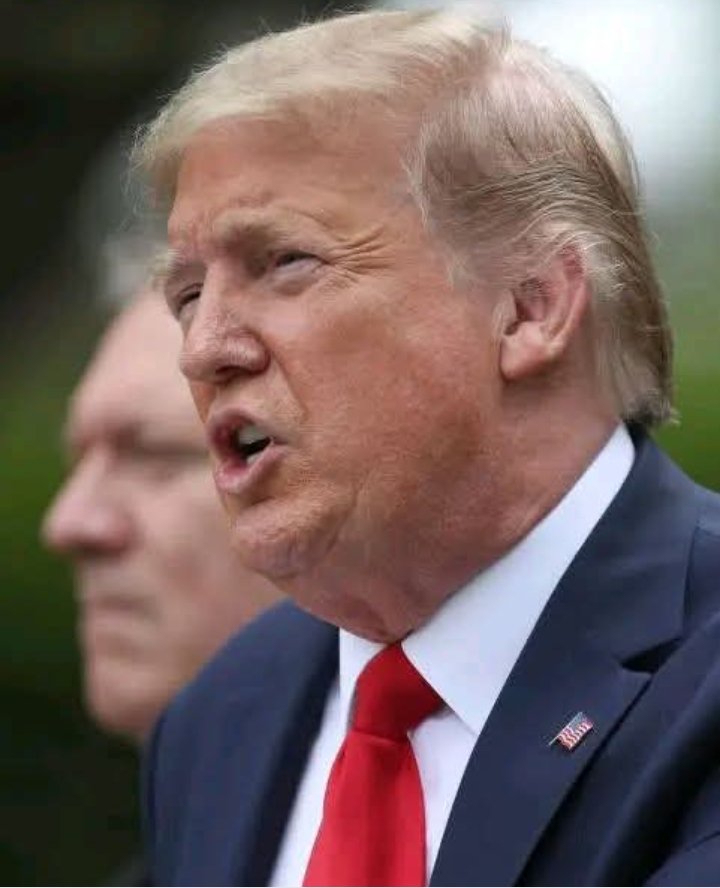
Donald Trump’s presidency remains one of the most polarizing chapters in modern American history.
More than a story about one man’s leadership style or policy agenda, it has become a lens through which many observers assess the current state of American democracy itself.
The question is not simply whether Trump strengthened or weakened democratic norms, but whether his rise and tenure exposed deeper realities already embedded within the political system.
At its core, democracy reflects the will, fears, and aspirations of its people.
Trump’s election in 2016 did not occur in a vacuum.
It emerged from long-standing frustrations with political elites, economic inequality, cultural change, and a sense among many Americans that traditional institutions no longer represented them.
In this sense, Trump’s presidency can be seen as a democratic outcome—one that followed constitutional rules and electoral processes—even as it challenged the spirit of democratic consensus.
One of the most striking features of Trump’s presidency was his relationship with democratic norms.
Longstanding expectations—such as respect for independent institutions, restraint in political rhetoric, and acceptance of electoral outcomes—were frequently tested.
His public attacks on the media as “the enemy of the people,” pressure on the judiciary, and repeated claims of election fraud without evidence unsettled many Americans and international observers.
These actions raised serious questions about the resilience of democratic guardrails when confronted by a leader willing to push against them.
At the same time, the very fact that courts, state officials, journalists, and civil society organizations resisted these pressures points to democracy’s enduring strength.
Judges ruled against executive overreach, journalists continued to investigate, voters turned out in record numbers, and institutions ultimately upheld the results of the 2020 election.
Trump’s presidency, therefore, highlighted both the vulnerability and the durability of American democracy.
Another dimension of Trump’s leadership was the deepening of political polarization.
His rhetoric often framed politics as a zero-sum battle between “real Americans” and perceived enemies—whether political opponents, immigrants, or the media.
This approach energized a loyal base but widened divisions across race, class, and ideology.
Democracy depends not only on elections, but also on shared norms of mutual tolerance and compromise.
The erosion of these norms during Trump’s tenure suggests a democracy under strain, where winning increasingly outweighs governing.
Yet, it would be simplistic to blame Trump alone for these divisions.
Polarization, distrust in institutions, and the spread of misinformation predate his presidency.
Social media, partisan media ecosystems, and economic dislocation had already reshaped political life.
Trump proved exceptionally skilled at exploiting these conditions, but he did not create them.
In this way, his presidency functioned less as the cause of democratic decline and more as a symptom of broader structural problems.
Supporters argue that Trump revitalized democratic participation by giving voice to voters who felt ignored.
His outsider persona challenged entrenched political interests and disrupted a system many believed was unresponsive.
From this perspective, Trump’s presidency represented democracy working as intended: voters choosing a leader who promised radical change.
That this choice alarmed others reflects the pluralism—and tension—inherent in a large, diverse democracy.
The cultural spectacle surrounding Trump, including constant media attention on his personal life and family dynamics, further blurred the line between politics and entertainment.
This environment arguably weakened substantive democratic debate, replacing policy discussions with scandal, outrage, and personality-driven narratives.
When democracy becomes consumed by spectacle, citizens risk disengaging from the deeper questions of governance and accountability.
Ultimately, Trump’s presidency forces Americans to confront uncomfortable truths about their democracy.
It reveals how easily norms can be challenged, how deeply divided the electorate has become, and how much democratic stability relies on shared commitments rather than written rules alone.
At the same time, it demonstrates that democratic institutions, while strained, can still function under pressure.
Is Donald Trump’s presidency a reflection of the current state of American democracy?
In many ways, yes.
It reflects a democracy wrestling with distrust, inequality, polarization, and rapid cultural change.
But it also reflects a system that, despite unprecedented stress, continues to allow debate, dissent, and peaceful transfers of power.
The lesson may not be that American democracy is broken beyond repair, but that it requires constant vigilance, civic engagement, and renewal to survive leaders—and moments—that test its limits.

Trump really didn’t expect that his move to strike Iran would end up impacting his own country

Well… the experts are saying it out loud now. On CNN this morning: Iran would win.

Just In: Trump Signs Sweeping Executive Order to Tighten U.S. Election Security. See what happens next

2 minutes ago! Iran’s newest nuclear missile was launched, see what happened!

Just In : Israeli police have violently dispersed citizens demonstrating against the recently approved and widely condemned death penalty for Palestinian prisoners, deploying water cannons to forcefully clear the crowds.

Breaking News:Trump Signs New Executive Order in Oval Office During Live Broadcas full details here

10 Minutes Ago, the First Air Combat Between a Russian MiG-29 and a US F-16 Took Place—Look What Happened

Just In : DeSantis Approves Bill to Rename Palm Beach Airport After Donald Trump check the link below

Just In :According to Arab media reports, Iran has shot down 146 MQ-9 Reaper drones during the ongoing war. Tap the link below

Just In : Social Security Payments Set for April 1: Here’s Who Will Receive Benefits This Wednesday. Tap the link below

Ukraine Drones DESTROY $130 MILLION Russian Ammo Train in Just 10 Minutes – With Cheap Homemade FPVs! Mind-blowing footage shows Ukrainian operators launching just 12 cheap homemade drones worth only $60,000 to completely obliterate a massive $130 million Russian military ammunition train in occupied Zaporizhzhia.
