
NEWS
JUSTIN:Appeals Court Hands Trump Administration Win on ICE Tactics Amid Minnesota Protests.

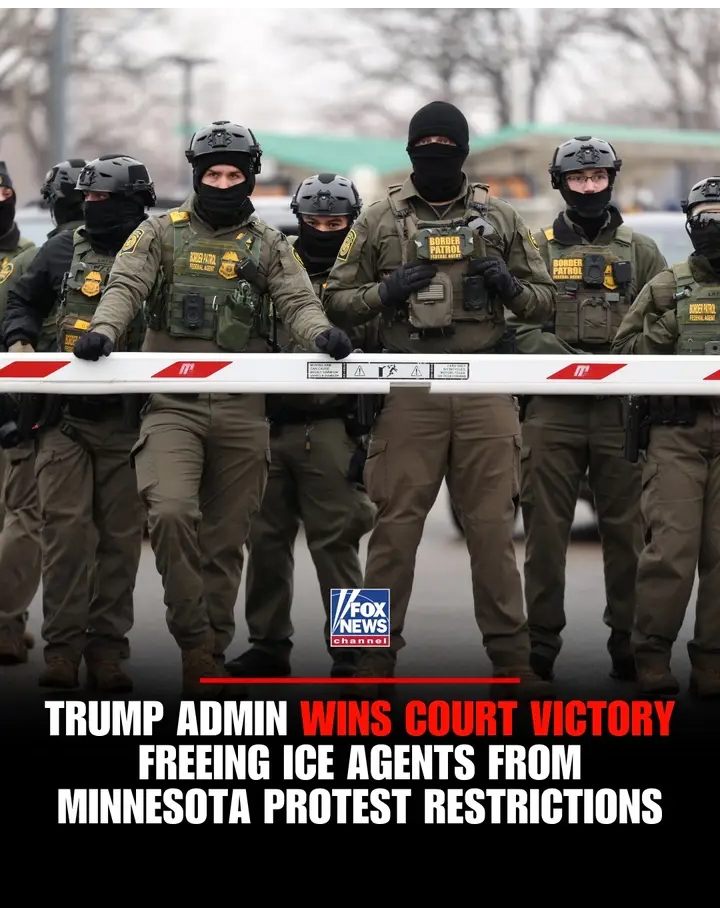
A federal appeals court has delivered a significant legal victory to the Trump administration, siding with federal authorities in a dispute over Immigration and Customs Enforcement (ICE) operations in Minnesota.
The ruling blocks restrictions that had limited how ICE agents could respond during enforcement actions amid ongoing confrontations with protesters in Minneapolis.
The decision overturns a lower court order that had constrained ICE officers from arresting or detaining individuals, using pepper spray, or taking retaliatory action against demonstrators without establishing probable cause.
Those limits were imposed after a wave of protests and clashes surrounding ICE activities in the city, where anti-ICE agitators have frequently confronted federal agents during operations.
In its ruling, the appeals court emphasized the need for law enforcement officers to retain discretion to protect themselves and carry out federal duties without what it viewed as undue judicial interference.
The court found that the lower court’s order risked hampering officers’ ability to respond quickly to volatile and potentially dangerous situations on the ground.
Supporters of the decision argue it restores necessary authority to ICE agents, allowing them to maintain order and enforce immigration laws effectively in the face of escalating protests.
They contend that restricting tactics such as detentions or crowd-control measures could expose officers to greater risk and undermine federal law enforcement.
Critics, however, warn that the ruling could open the door to abuses of power and chill lawful protest.
Civil liberties advocates have long argued that clear limits and oversight are essential to prevent excessive force and protect constitutional rights during demonstrations.
The ruling underscores the broader national debate over immigration enforcement, protest rights, and the balance between public safety and civil liberties.
As tensions remain high in Minnesota and elsewhere, the decision is likely to fuel continued legal and political battles over the scope of ICE’s authority in the United States.

Trump really didn’t expect that his move to strike Iran would end up impacting his own country

Well… the experts are saying it out loud now. On CNN this morning: Iran would win.

Just In: Trump Signs Sweeping Executive Order to Tighten U.S. Election Security. See what happens next

2 minutes ago! Iran’s newest nuclear missile was launched, see what happened!

Just In : Israeli police have violently dispersed citizens demonstrating against the recently approved and widely condemned death penalty for Palestinian prisoners, deploying water cannons to forcefully clear the crowds.

Breaking News:Trump Signs New Executive Order in Oval Office During Live Broadcas full details here

10 Minutes Ago, the First Air Combat Between a Russian MiG-29 and a US F-16 Took Place—Look What Happened

Just In : DeSantis Approves Bill to Rename Palm Beach Airport After Donald Trump check the link below

Just In :According to Arab media reports, Iran has shot down 146 MQ-9 Reaper drones during the ongoing war. Tap the link below

Just In : Social Security Payments Set for April 1: Here’s Who Will Receive Benefits This Wednesday. Tap the link below

Ukraine Drones DESTROY $130 MILLION Russian Ammo Train in Just 10 Minutes – With Cheap Homemade FPVs! Mind-blowing footage shows Ukrainian operators launching just 12 cheap homemade drones worth only $60,000 to completely obliterate a massive $130 million Russian military ammunition train in occupied Zaporizhzhia.
