
NEWS
Breaking News:“THIS WON’T BE A SHORT WAR”: IRANIAN SUBMARINES MOVE TOWARD HORMUZ AS U.S. ARMADA AND ISRAEL BRACE FOR A BLOODY SHOWDOWN The chessboard is shifting and fast. Read the full story eaking News:“THIS WON’T BE A SHORT WAR”: IRANIAN SUBMARINES MOVE TOWARD HORMUZ AS U.S. ARMADA AND ISRAEL BRACE FOR A BLOODY SHOWDOWN The chessboard is shifting and fast. Read the full story

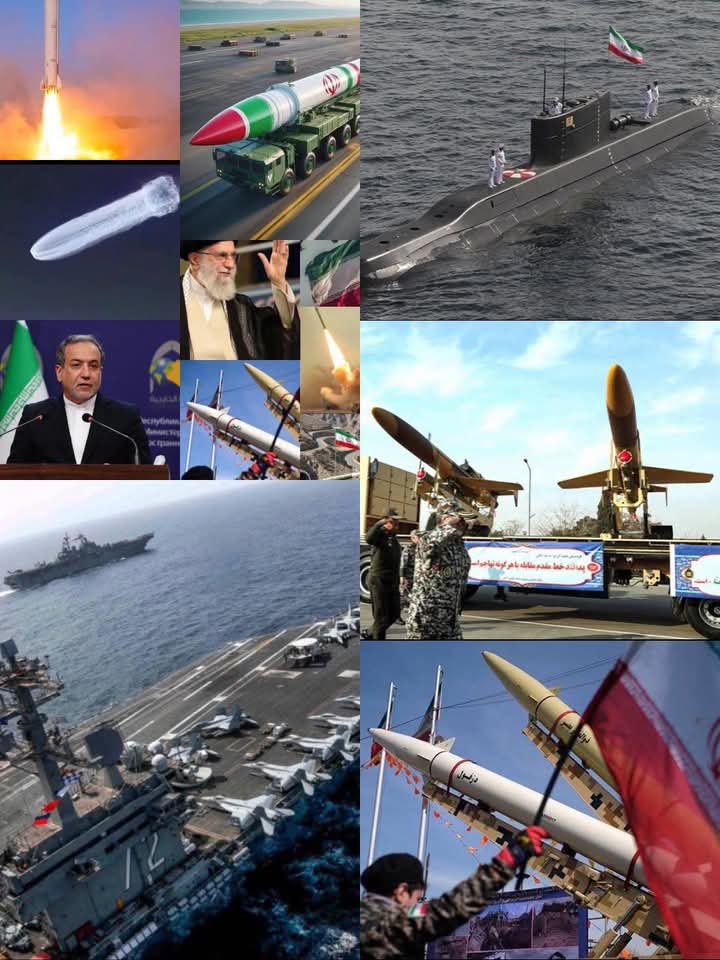
Breaking News:“THIS WON’T BE A SHORT WAR”: IRANIAN SUBMARINES MOVE TOWARD HORMUZ AS U.S. ARMADA AND ISRAEL BRACE FOR A BLOODY SHOWDOWN
The chessboard is shifting and fast. Read the full story
Reports indicate that Iranian submarines Ghadir and Fateh have begun moving toward the Arabian Gulf near the Strait of Hormuz, a narrow maritime artery through which a fifth of the world’s oil flows.
Military analysts say the movement appears to be prepositioning, not routine patrol.
In other words: this looks like preparation, not posturing.
THE STRAIT THAT CAN STOP THE WORLD
The Strait of Hormuz is more than water and coordinates. It is leverage.
A single disruption there can send oil prices soaring, cripple shipping lanes, and drag multiple nations into crisis.
Iran knows this. So does Washington.
So does Israel.
That’s why even reported submarine movement is enough to set off alarms across global defense networks.
THE PENTAGON’S WARNING: IRAN IS REBUILDING
Fueling the tension is the Pentagon’s 2026 National Defense Strategy, which warns that Iran is rebuilding its military capabilities and may once again pursue nuclear weapons development.
The assessment lands like gasoline on an already burning fire.
To U.S. planners, this isn’t theory — it’s trajectory.
THE U.S. RESPONSE: CARRIERS, FIGHTERS, AND A MESSAGE
As tensions escalate, the USS Abraham Lincoln carrier strike group is heading toward the Middle East, joined by Strike Eagle fighters a clear signal of readiness, not reassurance.
The deployment follows Donald Trump’s warning of an “armada” moving toward Iran, issued amid Tehran’s violent crackdown on domestic protests.
The message from Washington is blunt: pressure will be met with presence.
IRAN FIRES BACK — WITH WORDS THAT HIT HARD
Iran’s Foreign Minister has responded with chilling clarity:
“If the U.S. attacks Iran again, we will use all our capabilities.
This war will be very bloody and messy not a short lived conflict and it will impact the region and people around the world.”
This wasn’t bluster.
It was a forecast.
Iran is signaling that any conflict would be asymmetrical, prolonged, and regional, pulling in proxies, trade routes, energy markets, and civilian populations far beyond the battlefield.
ISRAEL WATCHES — AND CALCULATE
Israel, long viewing Iran as an existential threat, is closely monitoring every movement.
Analysts warn that miscalculation by any side could trigger a chain reaction one that diplomacy may not be able to stop once it starts.
When submarines move, carriers follow, and threats harden, history shows one truth:
Escalation rarely announces itself loudly — until it’s too late.
THE REAL DANGER: THINKING THIS WILL BE QUICK
Perhaps the most dangerous assumption now circulating is that any clash would be limited or controlled.
Iran is openly rejecting that narrative.
So are the facts on the water.
A war in the Strait of Hormuz wouldn’t just be regional.
It would be global by consequence hitting fuel prices, supply chains, alliances, and fragile economies already under strain.
THE MOMENT BEFORE THE MOMENT
This is the phase history books describe as “the final buildup.”
Ships moving.
Warnings issued.
Diplomacy whispering behind closed doors.
The world is now watching the narrow stretch of sea where a single decision could redraw global stability.
Because if the next move comes, it won’t be a warning.
It will be irreversible.

HIS HAND WAS TREMBLING” — THE MOMENT Donald Trump AND Melania Trump FROZE 80,000 PEOPLE IN SILENCE

BREAKING:“The President Who Never Sleeps?” Pilot’s 30-Year Claim Reveals a Different Side of Donald Trump.

Just In: The betrayal cuts deep—watching career Democrats like Pelosi whisper with their next generation while America burns.

AOC warned the South that “the North” is about to pull up.

When Donald Trump was five years old, his father Fred would wake him at dawn on Saturdays, hand him a paper bag with a bologna sandwich, and drive him to a construction site in Brooklyn. Full story

Faith Is Our Foundation”: JD Vance Calls for National Renewal Through Prayer at ‘Rededicate 250’ Event.

SPEAKER JOHNSON DEFENDS ‘IN GOD WE TRUST’ AND NATIONAL REDEDICATION AGAINST SEPARATION CRITICS

BREAKING: Lindsey Graham Warns Republicans — Opposing Donald Trump Could End Political Careers

Just In : Gates made the comments during an interview regarding his book How to Avoid a Climate Disaster.

Just In : Trump and Netanyahu Hold Urgent 30-Minute Call as Intel Warns Iran May Be Buying Time for War. See what happens next

BREAKING NEWS:Trump Issues Stark New Warning to Iran as Regional Tensions Escalate.
