
NEWS
BREAKING:DHS Orders Immediate Body Camera Deployment for Federal Officers in Minneapolis Amid Accountability Push. Read the full story!

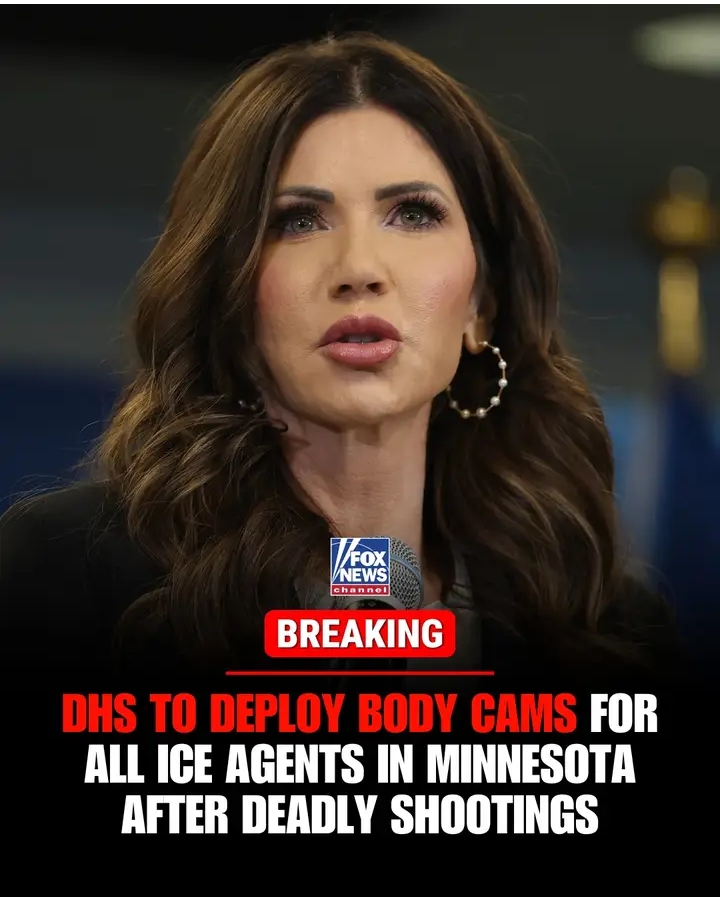
In a move aimed at boosting transparency and restoring public confidence, Department of Homeland Security (DHS) Secretary Kristi Noem announced that body cameras will be immediately deployed to every federal officer operating in Minneapolis.
The initiative, she said, will serve as a pilot program, with plans to expand body camera use nationwide as funding becomes available.
The decision follows renewed national scrutiny over the use—or lack—of body cameras in federal immigration enforcement operations.
Recent shootings in Minneapolis have intensified public debate, exposing uneven policies across federal agencies and raising serious questions about accountability, officer conduct, and civilian protection.
“Body cameras are about transparency, accountability, and trust,” Noem said in a statement.
“They protect the public and our officers by providing a clear, objective record of events in the field.”
Unlike many state and local law enforcement agencies, which have widely adopted body-worn cameras over the past decade, federal immigration enforcement has lagged behind, operating under fragmented guidelines that vary by agency and region.
Critics argue this inconsistency has fueled mistrust, particularly in communities already wary of federal enforcement actions.
Civil rights advocates welcomed the announcement but cautioned that implementation and oversight will be key.
“Body cameras are only effective if they are used consistently and the footage is handled transparently,” said one Minneapolis-based legal advocate.
“Clear rules on activation, data storage, and public access will matter just as much as the cameras themselves.”
Law enforcement groups, meanwhile, noted that body cameras can also serve as a safeguard for officers, helping document encounters and reduce false accusations.
Studies in several jurisdictions have shown that body-worn cameras can lower the number of complaints and use-of-force incidents when properly implemented.
DHS officials confirmed that the Minneapolis rollout will begin immediately, with officers receiving guidance on camera usage and data protocols.
Expansion to other cities and regions will depend on congressional funding and logistical capacity.
As Minneapolis once again becomes a focal point in the national conversation on policing and federal enforcement, the DHS move signals a shift toward greater oversight—one that could reshape how immigration and federal law enforcement operations are conducted across the United States.

Ilhan Omar has quietly amended her financial disclosure, slashing her reported net worth from a staggering $6 million to $30 million down to just $18,000 to $95,000. She now claims it was all a simple “accounting error” involving her husband’s winery and venture capital firm valuations that mysteriously ballooned in prior filings.

Breaking new: 12 States Roll Out Local Stimulus Checks on April 22, 2026 — Here’s Who Qualifies

Breaking News : Trump Declares U.S. “Won’t Be Pushed Around” by Iran as Tensions Escalate

Just In: EMOTIONAL: Trump Shares Heartfelt Update on Ivanka’s Health, Thanks Supporters Worldwide

Breaking Trump–Pope Rift Rekindles Strain Among U.S. Catholics Rising tensions between President Donald Trump and Pope Leo XIV are once again placing many American Catholics at the crossroads of political allegiance and religious identity.

Just In : U.S. Weighs $6 Billion Asset Release as Opening Move in High-Stakes Iran Peace Deal

BREAKING: Trump Just Told CBS News Iran Has “Agreed to Everything.”

U.S. Representative Robert Menendez expressed profound alarm over President Donald Trump’s recent actions, stating that his attack on the Pope, combined with posting a Jesus-like image of himself, leaves Americans no doubt about his instability.

Breaking News: France, U.K. Welcome Hormuz Reopening but Demand Lasting Freedom of Navigation

BREAKING🚨 RFK Jr. told Congress he never said Black children on ADHD meds should be sent to “wellness farms” to be “re-parented.” There is a recording. He still denied it.

Breaking News: Social Security Payments Set for April 22, 2026 — Who Will Receive Benefits This Week
