
NEWS
Breaking News: White House Declares End to Iran Conflict, Signals Historic Shift From War to Fragile Peace

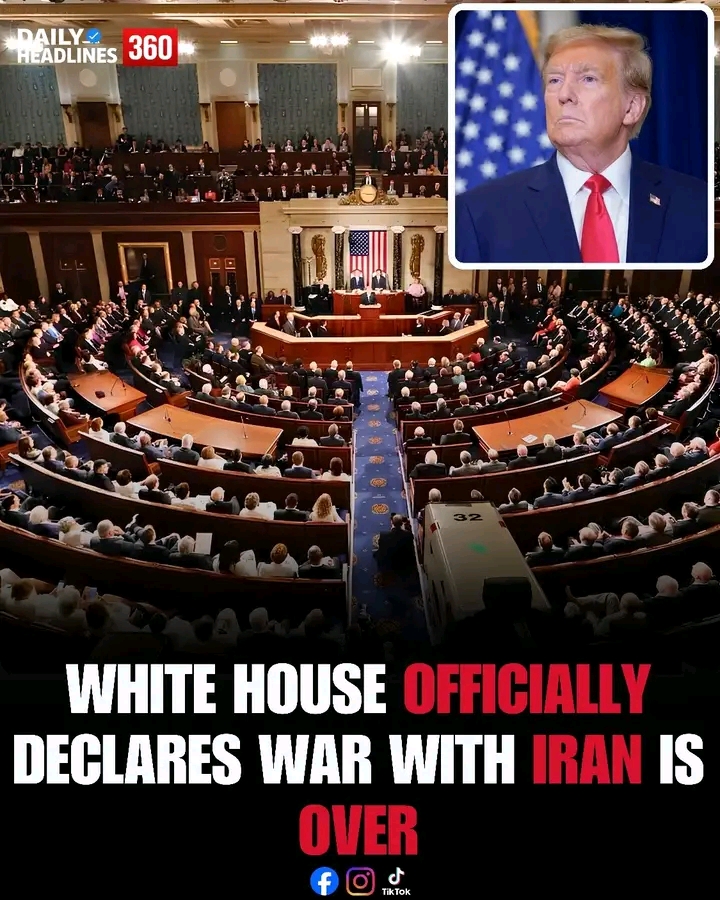
In a dramatic and potentially historic move, the White House has formally notified Congress that U.S. military hostilities with Iran have officially concluded—marking a pivotal turning point after weeks of escalating confrontation.
In a letter sent to congressional leaders, President Donald Trump stated that the conflict, which began earlier this year, has effectively come to an end following a sustained ceasefire.
According to the administration, there has been no exchange of fire between U.S. and Iranian forces since early April, prompting the declaration that “hostilities have terminated.”
The announcement represents more than just a procedural update—it signals a broader shift away from active combat operations toward what officials describe as a period of stabilization and strategic recalibration.
The White House argues that the ceasefire has held long enough to justify ending the formal phase of the conflict, potentially opening the door for diplomatic engagement and long-term de-escalation.
However, the situation remains complex beneath the surface. While active fighting has ceased, U.S. forces are still deployed across the region, and officials have acknowledged that Iran continues to pose a “significant” threat.
This underscores that the end of hostilities does not necessarily mean the end of tensions.
The timing of the declaration is also significant. It coincides with a key legal deadline under the War Powers Resolution, which requires presidential military actions to receive congressional approval after 60 days.
By declaring the conflict over, the administration effectively sidesteps the need for such authorization—an interpretation that has already sparked debate in Washington.
Supporters of the move frame it as a decisive success, pointing to the rapid timeline of the military campaign and the ceasefire that followed.
Critics, however, argue that the continued military presence and enforcement actions in the region blur the line between peace and ongoing conflict, raising constitutional and strategic questions.
For now, the declaration stands as a powerful symbolic moment: the guns have fallen silent, and a volatile chapter in U.S.–Iran relations appears to be closing.
Yet as history has often shown, the end of war is rarely the end of the story—it is the beginning of what comes next.

HIS HAND WAS TREMBLING” — THE MOMENT Donald Trump AND Melania Trump FROZE 80,000 PEOPLE IN SILENCE

BREAKING:“The President Who Never Sleeps?” Pilot’s 30-Year Claim Reveals a Different Side of Donald Trump.

Just In: The betrayal cuts deep—watching career Democrats like Pelosi whisper with their next generation while America burns.

AOC warned the South that “the North” is about to pull up.

When Donald Trump was five years old, his father Fred would wake him at dawn on Saturdays, hand him a paper bag with a bologna sandwich, and drive him to a construction site in Brooklyn. Full story

Faith Is Our Foundation”: JD Vance Calls for National Renewal Through Prayer at ‘Rededicate 250’ Event.

SPEAKER JOHNSON DEFENDS ‘IN GOD WE TRUST’ AND NATIONAL REDEDICATION AGAINST SEPARATION CRITICS

BREAKING: Lindsey Graham Warns Republicans — Opposing Donald Trump Could End Political Careers

Just In : Gates made the comments during an interview regarding his book How to Avoid a Climate Disaster.

Just In : Trump and Netanyahu Hold Urgent 30-Minute Call as Intel Warns Iran May Be Buying Time for War. See what happens next

BREAKING NEWS:Trump Issues Stark New Warning to Iran as Regional Tensions Escalate.
