
NEWS
Just In : Standing Firm: Why Trump Supporters Aren’t Disappearing—They’re Just Done Arguing

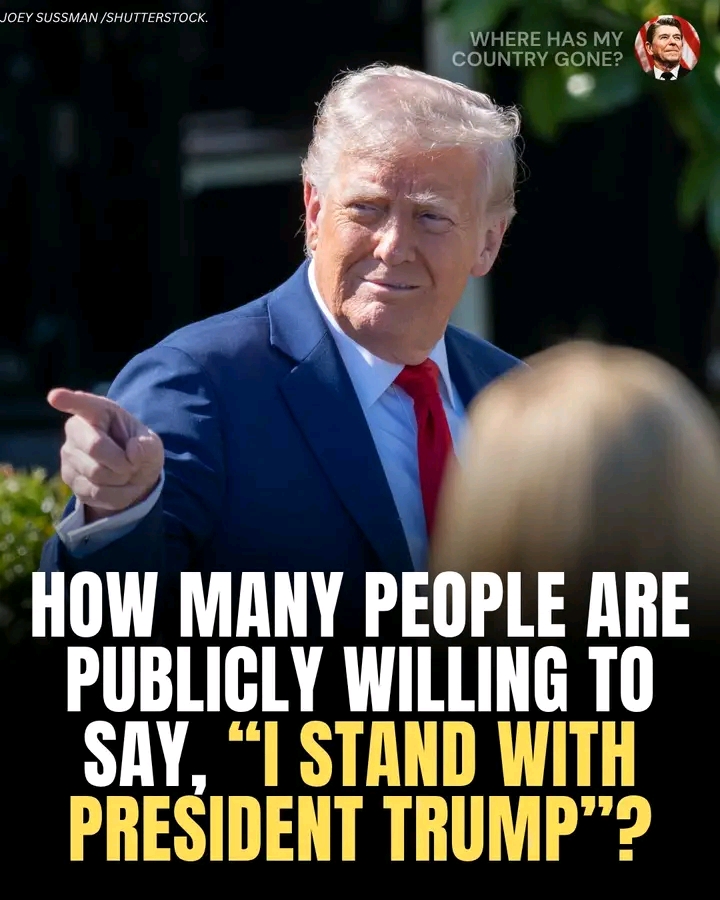
A familiar narrative has been circulating across media platforms and political commentary: that supporters of Donald Trump are dwindling, fading into the background as the political landscape evolves. But for many Americans, that portrayal doesn’t match reality—it reflects a misunderstanding of what’s actually happening.
Rather than shrinking, a significant number of Trump supporters say they’ve simply stepped back from the constant cycle of debate. Years of heated arguments—online, in workplaces, even among friends and family—have led to exhaustion. For these individuals, it’s not about changing beliefs or losing enthusiasm; it’s about choosing when and where their voices matter most.
Political discourse in recent years has become increasingly polarized. Conversations often feel less like genuine exchanges and more like entrenched battles, where neither side is willing to listen. In that environment, some Trump supporters have opted out of day-to-day debates, not because they feel defeated, but because they see little value in repeating arguments that go nowhere.
Yet stepping back from argument doesn’t mean stepping away from participation. Many remain engaged in ways that are quieter but no less impactful: voting, attending rallies, supporting local candidates, and staying connected within like-minded communities. Their political identity hasn’t faded—it has simply shifted away from constant visibility.
This quieter presence can be mistaken for absence. In a media environment driven by volume and confrontation, those who choose restraint are often overlooked. But elections are not decided by who argues the loudest online; they are decided at the ballot box, where participation speaks louder than commentary.
For these supporters, pride in their political stance remains intact. They see themselves not as a disappearing group, but as one that is still present, still committed, and still ready to make their voices heard when it matters most.
The broader lesson may extend beyond any one political movement. In an era dominated by noise, silence can be misinterpreted. But silence, in many cases, is not surrender—it’s strategy, fatigue, or simply a different way of engaging.
Whether one agrees or disagrees with their views, understanding this distinction is key to grasping the current political climate. Beneath the surface, many voices remain—less visible, perhaps, but far from gone.

HIS HAND WAS TREMBLING” — THE MOMENT Donald Trump AND Melania Trump FROZE 80,000 PEOPLE IN SILENCE

BREAKING:“The President Who Never Sleeps?” Pilot’s 30-Year Claim Reveals a Different Side of Donald Trump.

Just In: The betrayal cuts deep—watching career Democrats like Pelosi whisper with their next generation while America burns.

AOC warned the South that “the North” is about to pull up.

When Donald Trump was five years old, his father Fred would wake him at dawn on Saturdays, hand him a paper bag with a bologna sandwich, and drive him to a construction site in Brooklyn. Full story

Faith Is Our Foundation”: JD Vance Calls for National Renewal Through Prayer at ‘Rededicate 250’ Event.

SPEAKER JOHNSON DEFENDS ‘IN GOD WE TRUST’ AND NATIONAL REDEDICATION AGAINST SEPARATION CRITICS

BREAKING: Lindsey Graham Warns Republicans — Opposing Donald Trump Could End Political Careers

Just In : Gates made the comments during an interview regarding his book How to Avoid a Climate Disaster.

Just In : Trump and Netanyahu Hold Urgent 30-Minute Call as Intel Warns Iran May Be Buying Time for War. See what happens next

BREAKING NEWS:Trump Issues Stark New Warning to Iran as Regional Tensions Escalate.
